
Table of Contents
Essential Content Marketing Metrics
Essential Content Marketing Metrics: Content marketing is a strategy used across industries to raise brand awareness and educate audiences, but many organizations have yet to determine how to measure its success accurately.
This article belongs to Content Marketing
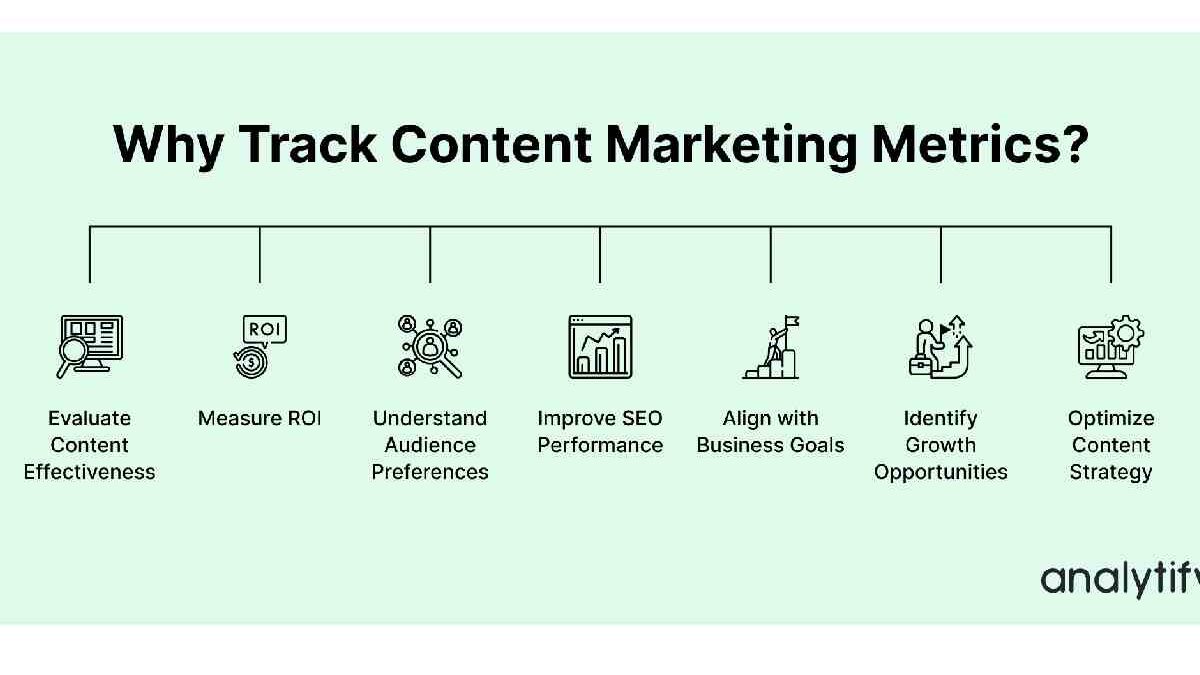
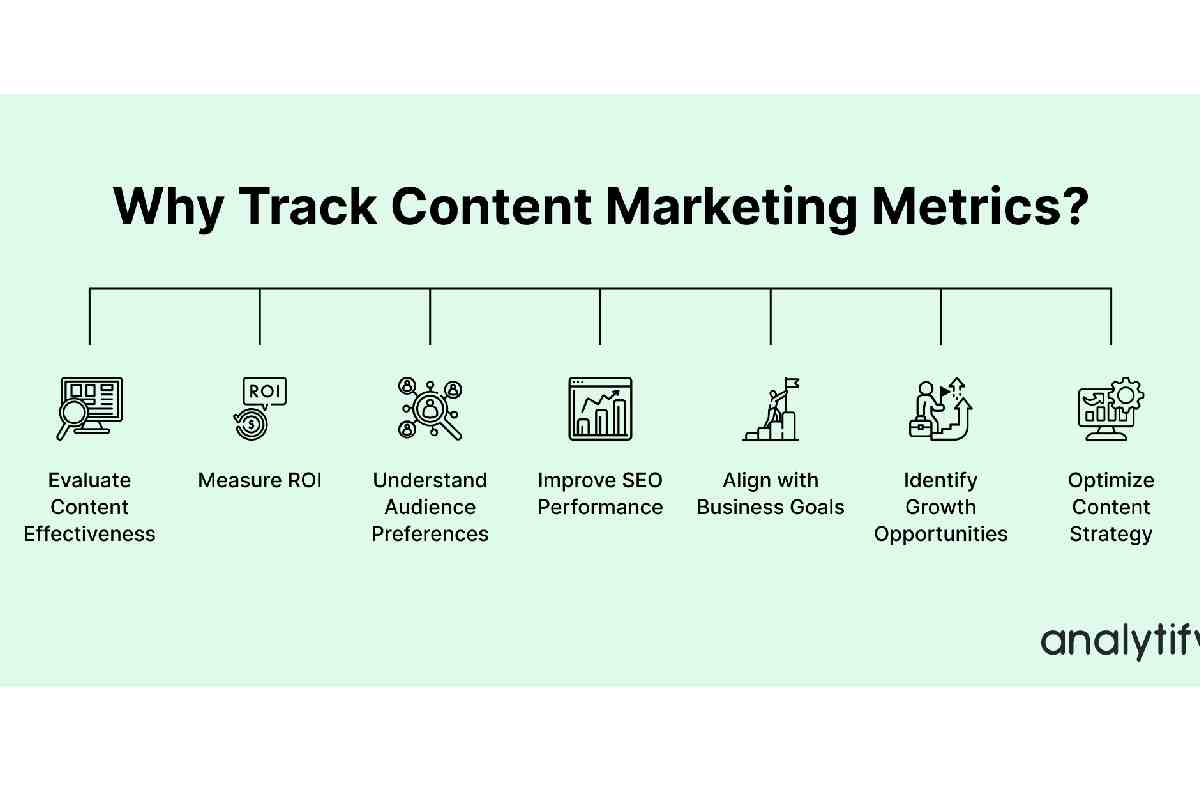
Marketing teams must justify the resources required to create high-quality content that moves the needle; therefore, metrics and the ability to measure against predetermined KPIs are essential.
Content Marketing Measurements
1. Web Traffic Source and Medium
- For many content marketers, website traffic is a crucial reporting metrics. Nevertheless, there are several ways to examine traffic metrics.
- If you’re new to measuring content performance, use the Channel report to determine the source of blog traffic.
- Perhaps most users arrive at your blog via a monthly email newsletter; whatever the case, you must comprehend how people access your content.
- You can also examine traffic metrics in greater detail using the Source/Medium report in Analytics.
- Perhaps your team has focused on optimizing content for search; to measure success and compare organic traffic month-over-month or year-over-year.
- If the emphasis has instead been on social content distribution, consider how referral traffic has increased over time and which channels bring the most visitors to your website.
For marketers looking at the broader development of the discipline, understanding the history of content marketing can also provide useful context about how content strategies have evolved over time.
2. User Behavior
- Metrics of user behavior by themselves do not reveal much.
- However, when combined with other metrics (such as traffic performance).
- They can provide marketers with directional information regarding reader engagement and content performance.
- Though these metrics are unlikely to be your sole measure of success, they can (and should) be used to help tell the story of your content’s performance.
- For example, you can determine if a blog post matches the intent of searchers if it attracts users organically and they spend considerable time reading it.
3. Impressions & CTR
- In Google Search Console, you should also track impressions and click-through rates, traffic, and user behavior.
- It will allow you to determine whether the keywords for which your content ranks translate into impressions and clicks in organic search.
- It won’t provide a complete picture of performance.
- Still, it can indicate whether your content is performing well (strong impressions and CTR) or if it requires adjustments (low impressions, low CTR, or a combination of the two).
4. Content Shares & Backlinks
- The primary objective of any content asset is to provide readers with value.
- Social shares and backlinks shed light on whether or not people are willing to share your content with their audiences, although no single metric can demonstrate this.
- Consider a blog post shared over 100 times on social media or an infographic that several industry-leading publications have picked up.
- These content metrics are essential, particularly if you have awareness-related objectives.
5. Keyword Rankings
- Ensure that you keep track of core keywords and review their rankings monthly. It requires keyword research to establish your top-priority keyword targets.
- We use SEM-Rush to track our client programs’ keywords, but many other tools are available.
- Especially if you’re pursuing competitive, high-value keywords, ranking improvements are a great way to demonstrate the success of your content marketing program.
6. Conversion Rate
Traffic is important, but visitors alone do not always demonstrate whether content is helping a business achieve its goals. Conversion rate is another useful content marketing metric because it connects content activity with a specific action.
A conversion can mean different things depending on the business. For example, a visitor may complete a contact form, subscribe to an email list, download a resource, request a quote, or make a purchase.
Marketers should identify the conversion they want to measure before creating a campaign. This makes it easier to determine whether a particular article, landing page, or content campaign is contributing to the desired result.
It is also useful to compare conversion rates between different content types. A detailed guide may generate fewer visitors than a short article but could produce more leads. Looking only at traffic would hide this difference.
7. Leads Generated
Lead generation is particularly important for businesses that sell services, software, professional solutions, or products that require consideration before purchase.
A content marketing campaign can attract potential customers at different stages of the buying process. An introductory article may bring someone into the website for the first time, while a detailed comparison or guide may encourage that visitor to contact the company.
Tracking the number of leads generated by content can therefore help marketers understand which topics are attracting potential customers.
It is useful to record both the total number of leads and the source of those leads. This can help determine whether search traffic, social media, email newsletters, or other distribution channels are producing valuable prospects.
8. Engagement Rate
Engagement can help marketers understand whether visitors are interacting with their content instead of simply arriving and leaving.
Depending on the platform and analytics system, engagement may include actions such as scrolling, clicking internal links, watching videos, downloading resources, or interacting with other page elements.
A high level of engagement does not automatically mean that a campaign has succeeded. However, it can provide useful information when combined with traffic, conversions, and other business metrics.
For example, if a page receives significant organic traffic and visitors regularly interact with related resources, this may indicate that the content is useful to the audience.
9. Returning Visitors
Returning visitors are another useful measurement for content marketers. A visitor who comes back to a website may already have some interest in the subject, brand, product, or service.
Educational websites and publishers can use returning visitor data to understand whether their content encourages people to come back for additional information.
Businesses can also compare new and returning audiences. A campaign designed to increase brand awareness may focus heavily on attracting new visitors, while an ongoing content strategy may aim to build a larger audience that returns regularly.
10. Content Performance by Topic
Not every topic performs in the same way. Some subjects may consistently attract organic traffic, while others may receive more attention through social media or email.
Creating topic-level reports can help marketing teams identify patterns.
For example, a company might discover that technical guides generate strong search traffic while industry news receives more social shares. Both content types can be useful, but they may serve different purposes.
Topic performance can also help with future editorial planning. Instead of choosing subjects based only on assumptions, marketers can use previous performance data to identify areas that deserve additional attention.
11. Cost Per Content Asset
Content marketing requires resources. Writers, editors, designers, SEO specialists, video creators, and other professionals may contribute to a single content asset.
For this reason, marketers can also measure the approximate cost of producing each piece of content.
Cost per asset can be compared with traffic, leads, conversions, backlinks, and other outcomes. A high-cost piece may still provide excellent value if it continues generating traffic and leads for a long period.
Similarly, a low-cost article may not necessarily be successful if it attracts little relevant traffic or produces no meaningful business results.
12. Content Marketing ROI
Return on investment, or ROI, brings several metrics together to evaluate the broader financial performance of content marketing.
The exact calculation depends on the business model and the goals of the campaign. A company may compare revenue attributed to content with the cost of producing and promoting that content.
ROI should not be the only metric used to evaluate content. Some content is designed primarily for awareness, education, or audience development and may not produce an immediate financial return.
However, measuring ROI where possible helps marketing teams communicate the business value of their work and make better decisions about future resources.
13. Brand Awareness
Content marketing can also be used to increase awareness of a business or organization. In this case, marketers may monitor branded searches, mentions, referral traffic, social engagement, and other indicators.
A visitor may discover a company through an educational article and later search for the brand directly. Measuring only the original article’s traffic would not necessarily capture the full effect of that interaction.
This is why content marketing measurement should include both direct and indirect signals whenever possible.
For businesses focused specifically on awareness, resources such as content marketing to boost brand awareness can provide additional context on how content can support visibility and audience recognition.
14. Backlink Quality
The number of backlinks is useful, but marketers should also consider the quality and relevance of those links.
A link from a relevant industry publication may provide more meaningful value than a large number of unrelated links. Relevant backlinks can also help users discover useful resources and can contribute to a website’s broader authority.
Content marketers should therefore track which pages earn links, where those links come from, and what type of content attracts them.
15. Measuring Content Over Time
Content performance should not always be judged immediately after publication. Some articles may gain traffic quickly, while others may take weeks or months to build visibility in search results.
Comparing performance across consistent time periods can reveal longer-term trends.
Marketers can review monthly, quarterly, or yearly changes in traffic, rankings, conversions, backlinks, and engagement. This makes it easier to identify content that continues to perform well and content that may need updating.
An effective measurement process is therefore continuous rather than a one-time activity. Data can help marketers identify what works, what needs improvement, and where future content resources should be invested.
Creating a Content Marketing Measurement Plan
Before collecting large amounts of data, marketing teams should decide which metrics actually matter to their objectives.
A simple measurement plan can include:
- Define the goal – Decide whether the campaign focuses on awareness, traffic, leads, sales, engagement, or another objective.
- Select KPIs – Choose the metrics that directly relate to the goal.
- Set a baseline – Record existing performance before launching a new campaign.
- Choose a reporting period – Decide whether results will be reviewed weekly, monthly, or quarterly.
- Track consistently – Use the same definitions and reporting methods over time.
- Compare results – Look for increases, decreases, and unusual changes.
- Improve the strategy – Use the findings to update existing content and plan future topics.
Google Search Console provides metrics such as clicks, impressions, CTR, and average position, and its reports can be grouped by dimensions such as queries, pages, countries, and devices.
For additional information about measuring website search performance, marketers can refer to the Google Search Console performance report, which provides information that can help with tracking search visibility and user interactions.
Final Thoughts
Content marketing metrics help organizations understand whether their content is achieving its intended purpose. Website traffic, user behavior, impressions, CTR, shares, backlinks, and keyword rankings provide useful information, but they should be viewed together rather than in isolation.
Additional measurements such as conversions, leads, engagement, returning visitors, content costs, ROI, and brand awareness can provide a broader picture of performance.
The most important point is to connect every metric to a specific business or marketing objective. When teams consistently measure performance, compare results, and use the information to improve future content, they can make more informed decisions about their content marketing strategy.