
Digital Marketing Technologies to Raise Your Business: Digital marketing technologies can never be optional in the current competitive business world. They are important components that assist business to appeal to customers, develop trust, enhance engagement, and raise sales. You can be a small local shop, an online brand, or a company in its development; nevertheless, with the help of appropriate marketing technologies, your work can be made easier and more effective.
Digital marketing does not only involve posting in the social media or running advertisements. It is regarding exploiting intelligent platforms, software, and automation solutions in order to access the right audience at the right time. Since the tools are available in search engine optimization, email automation, and analytics dashboards, the technologies enable businesses to make more decisions and derive greater value out of each marketing activity.
This paper describes the most significant technology of digital marketing, its functionality, and how they can assist in saving your business in a viable and sustainable manner.
Table of Contents
Digital Marketing Technologies
Digital marketing technologies refer to digital tools, platforms, and software that is used to market products or services via the Internet. The technologies can support such activities as content marketing, email campaigns, paid advertising, customer relationship management, analytics and social media engagement, web management and SEO.
In other words, they take marketing to a level which is quicker, smarter and measurable.
Simple Definition Table
| Term | Meaning |
| Digital Marketing | Promoting products or services using online channels |
| Marketing Technology | Software and tools used to plan, run, and track marketing campaigns |
| Automation | Using technology to perform repetitive marketing tasks automatically |
| Analytics | Collecting and analyzing data to improve results |
Why digital marketing technologies matter for business growth?
Businesses that rely only on traditional marketing often struggle to keep up with changing customer behavior. Today’s customers search online, compare options, read reviews, and engage with brands through websites, search engines, social media, and email.
Digital marketing technologies help businesses:
- Reach more potential customers
- Build a stronger online presence
- Improve customer targeting
- Save time with automation
- Track campaign performance
- Increase conversions and revenue
- Personalize customer experiences
When used correctly, these tools do not just promote a business. They create a full system for attracting, converting, and retaining customers.
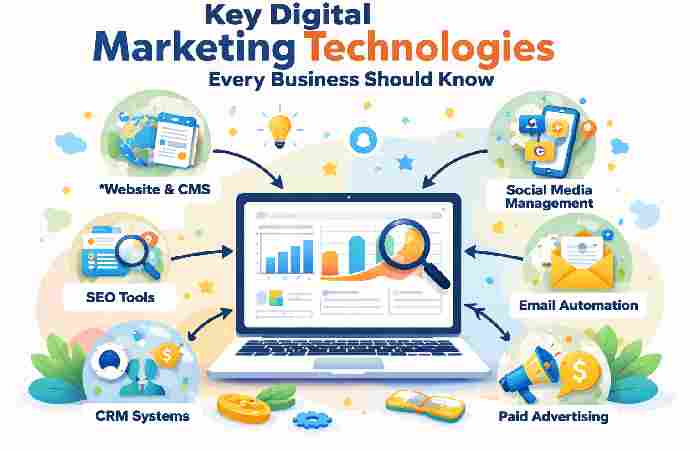
Key digital marketing technologies every business should know
-
Website and Content Management Systems
A business website is the foundation of digital marketing. It acts as the online home of your brand. CM systems, also referred to as CMS systems, are effective tools that allow business organizations to develop, maintain, and revise website content without necessarily having advanced technical knowledge.
Websites You can easily use popular CMS platforms to publish a blog post, product pages, service detail, landing pages, and contact forms.
Benefits of CMS Technology
| Benefit | How It Helps Business |
| Easy content updates | Keeps your website fresh and relevant |
| Better user experience | Helps visitors find information quickly |
| SEO-friendly structure | Improves search engine visibility |
| Mobile responsiveness | Reaches users on all devices |
A well-managed website creates trust and gives your marketing campaigns a place to convert visitors into customers.
-
Search Engine Optimization Tools
SEO technologies help businesses improve their visibility on search engines. When people search for products or services related to your business, SEO tools help you understand keywords, optimize content, monitor rankings, and identify technical issues.
SEO is valuable because it brings organic traffic, which often has strong intent and long-term value.
Common Uses of SEO Tools
| SEO Function | Purpose |
| Keyword research | Finds what people are searching for |
| Site audits | Detects website errors and technical problems |
| Rank tracking | Monitors search visibility over time |
| Competitor analysis | Shows what competing brands are doing |
Businesses that invest in SEO technologies often build steady, long-lasting traffic instead of depending only on paid ads.
-
Social Media Management Platforms
Social media is one of the most powerful digital channels for brand visibility and customer interaction. Social media technologies help businesses schedule posts, manage multiple platforms, respond to comments, and analyze engagement.
Instead of posting manually every day, businesses can use these tools to plan content in advance and maintain a consistent brand voice.
Advantages of Social Media Tools
| Advantage | Business Value |
| Scheduled posting | Saves time and improves consistency |
| Content planning | Helps organize campaigns and promotions |
| Performance tracking | Shows which content performs best |
| Multi-platform management | Simplifies handling several social channels |
These technologies are especially useful for brands that want to grow awareness and stay active without overwhelming their teams.
-
Email Marketing Automation
Email remains one of the most cost-effective marketing channels. Email marketing technologies allow businesses to send newsletters, promotional messages, welcome emails, abandoned cart reminders, and personalized follow-ups automatically.
Automation makes email marketing more powerful because messages can be triggered by customer behavior instead of being sent manually every time.
Types of Automated Email Campaigns
| Campaign Type | Example Purpose |
| Welcome email | Introduce new subscribers to your brand |
| Promotional email | Share offers, discounts, or seasonal campaigns |
| Follow-up email | Reconnect with interested leads |
| Reminder email | Encourage unfinished purchases or actions |
Email automation helps businesses nurture leads, improve loyalty, and increase repeat purchases.
-
Customer Relationship Management Systems
CRM systems are technologies designed to organize customer information, track interactions, and improve communication. They help businesses understand where leads come from, how customers behave, and what actions move them toward a purchase.
For growing businesses, CRM tools create better coordination between marketing and sales.
CRM Benefits for Businesses
| Feature | Benefit |
| Contact management | Stores customer details in one place |
| Lead tracking | Helps identify sales-ready prospects |
| Customer history | Improves personalization |
| Team collaboration | Aligns sales and marketing efforts |
A CRM system allows businesses to stop guessing and start building better customer relationships based on real data.
-
Paid Advertising Technologies
Paid advertising platforms are essential for businesses that want fast visibility. These technologies include search ads, display ads, social media ads, video ads, and retargeting systems. They help businesses reach highly specific audiences based on demographics, interests, behavior, and search intent.
Paid advertising is effective because it can deliver immediate traffic and measurable results.
Paid Advertising Channels Table
| Advertising Channel | Best For |
| Search ads | Reaching people actively searching for solutions |
| Display ads | Building awareness across websites |
| Social media ads | Targeting users by interests and behavior |
| Retargeting ads | Re-engaging previous website visitors |
When combined with strong landing pages and analytics, paid advertising technologies can produce excellent return on investment.
-
Analytics and Reporting Tools
Without measurement, marketing becomes guesswork. Analytics technologies help businesses track traffic, conversions, user behavior, bounce rates, campaign performance, and customer journeys.
These tools show what is working and what needs improvement.
Important Metrics to Monitor
| Metric | Why It Matters |
| Website traffic | Measures visitor volume |
| Conversion rate | Shows how many visitors take action |
| Bounce rate | Indicates whether users leave too quickly |
| Cost per lead | Tracks the efficiency of advertising |
| Customer acquisition cost | Measures the cost of gaining new customers |
Analytics tools give businesses the confidence to invest in strategies that deliver results instead of relying on assumptions.
How do digital marketing technologies work together?
The real power of digital marketing technologies appears when they are used together rather than separately.
For example:
- A customer finds your website through SEO
- They read a blog post created in your CMS
- They sign up for your email newsletter
- Your CRM stores their information
- An email automation workflow sends helpful content
- A retargeting ad reminds them about your service
- Analytics tools show which channel led to the sale
This connected system creates a smooth customer journey from first contact to final conversion.
Best strategy for small and growing businesses
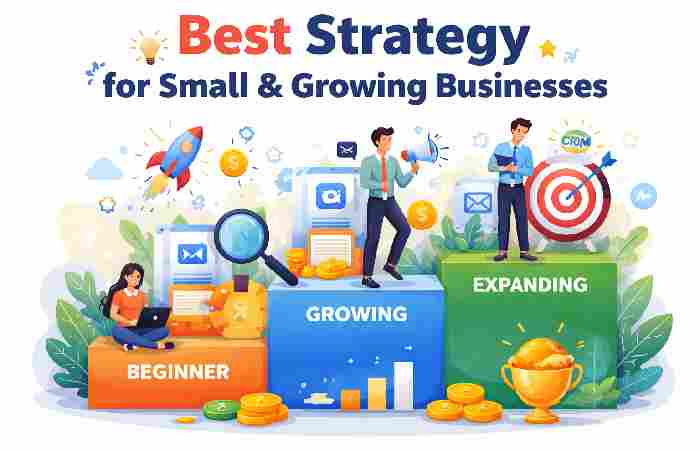
Businesses do not need every technology at once. The smartest approach is to start with the basics and expand as your business grows.
Suggested Technology Priorities
| Business Stage | Recommended Technologies |
| Beginner | Website CMS, SEO basics, social media tools |
| Growing | Email automation, analytics, paid ads |
| Expanding | CRM, advanced automation, conversion tracking |
Starting small helps businesses stay focused, avoid unnecessary costs, and learn which tools bring the most value.
Common mistakes to avoid
Many businesses adopt digital tools but fail to use them effectively. Some common mistakes include choosing too many platforms, ignoring analytics, automating poor content, or focusing only on traffic instead of conversions.
Technology should support strategy, not replace it. A business still needs clear goals, quality content, a strong message, and a good understanding of its audience.
Conclusion
The digital marketing technologies have reshaped the way the companies attain and retain consumers. They bring brands to the spotlight, streamline and formalize them. They have websites and SEO tools, email automation, social media, and analytics dashboard, and each of them has its specific point in business development.
Even small businesses can use these tools, which is the most suitable. Firstly, you need not have a very large budget. The key point is to choose the right option in terms of the technologies to use in your goals and utilize them on a regular basis.
By joining forces and combining the right digital marketing technologies with quality content and customer-focus, the companies will deliver a good foundation of long-term success. The smart technology is not an upper-hand among the world where the e-competition is accelerating. It is a powerful path of bringing your business to the next level.