
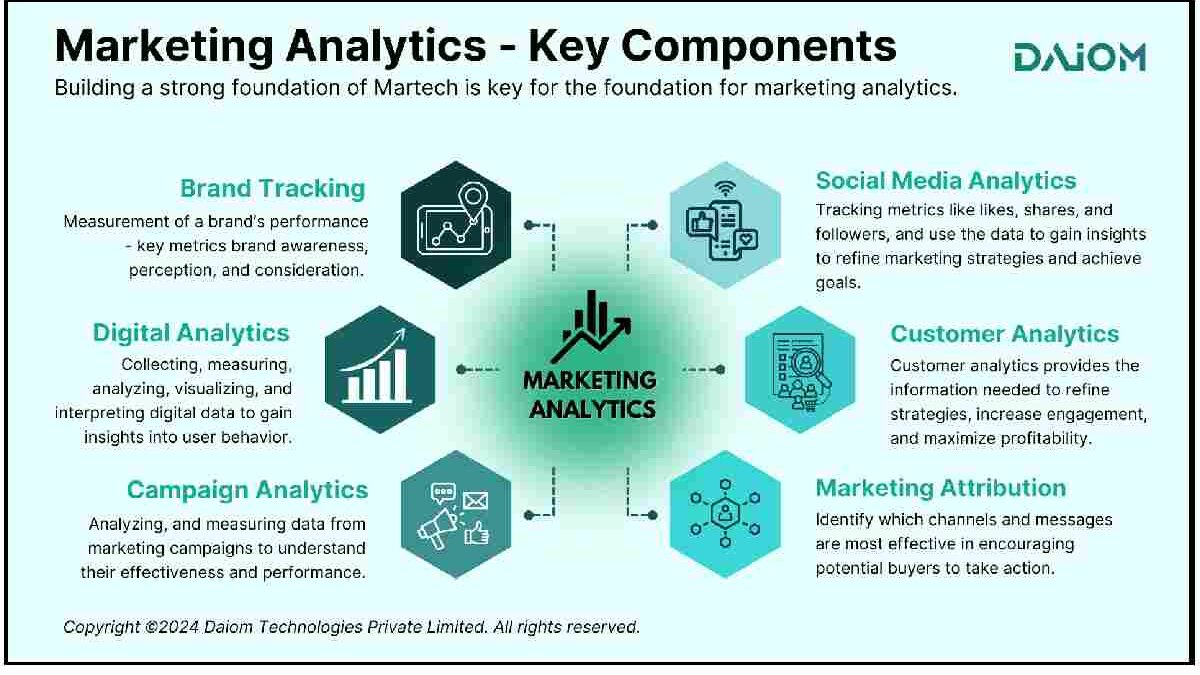
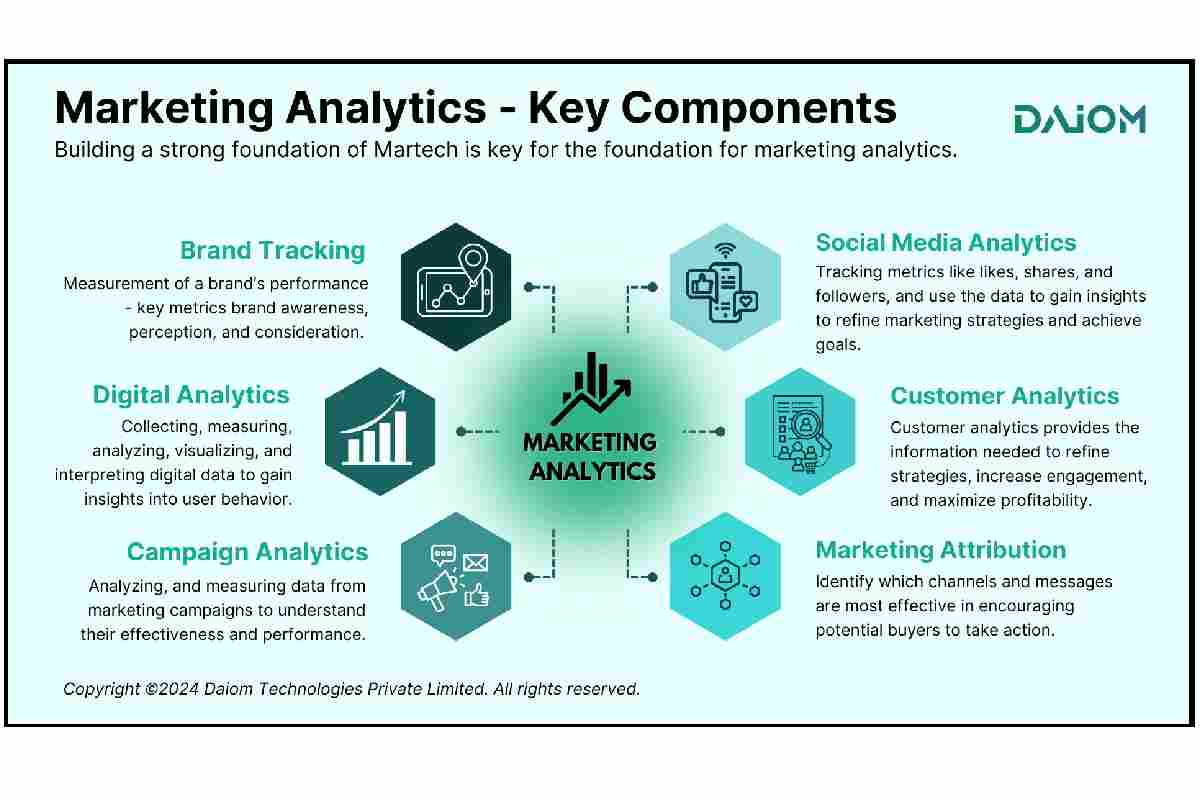
What is Marketing Analytics? Marketing analytics is the study of data to see how well marketing activities work. By using technology and simple steps to look at marketing data, businesses learn what makes customers buy, improve their ads, and get more value for their money.
Table of Contents
A Quick History of Marketing Analytics
| Year / Event | What Happened |
|---|---|
| 1450s | The printing press was invented. Soon, the first ads appeared in newspapers. |
| 1865 | Banker Sir Henry Furness said he beat competitors by studying his ads and promotions. (This was the first mention of “business intelligence.”) |
| 1900s | The University of Pennsylvania taught the world’s first marketing class. |
| 1942 | TV ads started. Companies wanted to know which ads turned viewers into buyers. |
How Does Marketing Analytics Work?
It’s not just fancy software. You need a clear plan. Here are the 4 easy steps most businesses follow:
1. Decide What to Measure
- Start with your big goal (example: “Sell more shoes this year”).
- Break it into smaller questions:
- Which ad gets the most clicks?
- How many people buy after seeing our Instagram post?
- Choose simple metrics:
- ROI (money earned vs. money spent)
- Conversions (people who actually buy)
- Click-through rate (people who click the ad)
- Brand awareness (how many know your brand)
- Set benchmarks (example: “Last year we had 500 sales; aim for 600 this year”).
2. Use Different Tools & Techniques
Use data to answer three types of questions:
| Type | Example Questions | Tools |
|---|---|---|
| Past | “Which ad made the most money last month?” “Did our TikTok campaign beat our email campaign?” | Charts, sales reports |
| Present | “Which app do our best customers use?” “Who is talking about us online right now?” | Google Analytics, social-media dashboards |
| Future | “If we add 2 salespeople in City X, how many extra sales?” “Which city should we advertise in next?” | Predictions, “what-if” calculators |
3. Check Your Tools & Fill the Gaps
- List what you already have (Google Analytics? Excel? Social-media insights?).
- Ask: “Can we answer all our questions?”
- If something is missing, get a simple tool or learn a new skill.
4. Act on What You Learn
- Data is useless if you don’t use it!
- Example: If Instagram ads bring zero sales, stop spending there and try YouTube.
- Keep testing, changing, and improving.
Why Does It Matter?
When businesses use marketing analytics well, they get:
- Better ads that reach the right people.
- Happier customers because the ads are useful, not annoying.
- More profit because money is spent wisely.
Quick Recap (Bullet Points)
- Define goals → choose metrics → set targets.
- Look at past, present, and future data.
- Use the right tools; upgrade when needed.
- Change your plan based on what the numbers say.

Information Tech Web
I'm Khizrana Begum, an emerging digital contributor associated with online platforms like informationtechweb.com. I focus on creating informative, reader-friendly content across technology, health, and general awareness topics. With a growing presence in digital publishing, her work aims to simplify complex subjects and deliver practical insights to a broad online audience.