
An effective marketing campaign is a set of promotional activities that is intended to accomplish a definite business objective, i.e. raising brand awareness, creating leads, selling products, enhancing customer interactions, or introducing a new product.
Revenue is not always a measure of success. A successful campaign can be one which:
Reaches the right audience
Creates strong brand recall
Encourages customer action
Builds long-term trust
Produces healthy interaction.
Enhances business development in the long run.
In plain terms, an effective marketing campaign is one that will take individuals beyond making an initial contact with a brand through noticing it to recalling it, believing in it and ultimately making a selection of it.
Table of Contents
The Importance of Marketing Campaigns As Never Before.
Thousands of messages are received by people on a daily basis. Advertisements are shown on mobile devices, computers, billboards, social networks, video sites and even within shopping environments. Due to this overload, random promotion is no longer possible among the brands. They require campaigns that have a concise message and a concise purpose.
Good campaign will assist a brand to shine out in a cluttered market. It is also useful in brand building. A lot of businesses market similar items, yet marketing is what makes a brand familiar, inspiring, premium, fun or reliable.
When done well, a campaign can:
- Make a name out of an unknown brand. Revive interest in an old product
- Build emotional loyalty
- Create word-of-mouth momentum
- Help customers understand value quickly
That is why some campaigns become part of culture while others disappear almost instantly.
The Real Meaning of Campaign Success
Before going deeper, it helps to define campaign success more practically.
| Term | Meaning |
| Brand Awareness | How many people recognize or remember your brand |
| Engagement | How actively people interact with your content or campaign |
| Conversion | How many people take the desired action, such as buying or signing up |
| Retention | How well the campaign helps keep customers loyal |
| ROI | Return on investment from campaign spending |
| Emotional Impact | How strongly the campaign connects with the audience |
A campaign becomes truly successful when it performs well across several of these areas, not just one.
Key Elements of Successful Marketing Campaigns
The best campaigns may look different on the surface, but underneath, they often follow the same principles.
- A Clear Goal
Every successful campaign starts with a defined objective. Without one, even creative ideas can become directionless.
A campaign goal might be:
- Increase website traffic by 30 percent
- Launch a product to a new audience
- Improve social media engagement
- Generate 1,000 qualified leads
- Increase festive-season sales
When the goal is clear, the message, channels, and measurement become much easier to plan.
- Deep Audience Understanding
Brands that know their audience well create better campaigns. They understand what their customers want, fear, enjoy, and expect.
Audience understanding includes:
- Demographics
- Buying habits
- Lifestyle preferences
- Digital behavior
- Pain points
- Emotional triggers
A campaign made for “everyone” usually connects with no one. The strongest campaigns feel personal because they are built around real audience insight.
- A Strong Message
The message is the heart of the campaign. It must be simple enough to remember and strong enough to influence action.
A good campaign message is usually:
- Easy to understand
- Relevant to audience needs
- Emotionally engaging
- Consistent across channels
- Aligned with the brand’s personality
When a message is confusing, people scroll past it. When it is sharp and meaningful, it sticks.
- Creative Storytelling
Facts inform, but stories persuade. Successful campaigns often use storytelling to make brands feel more human.
Storytelling can include:
- Customer journeys
- Brand mission
- Real-life problems and solutions
- Inspiring transformations
- Humor or emotional moments
People may forget a product feature, but they often remember how a campaign made them feel.
- The Right Timing
Even the best message can fail if it comes at the wrong time. Timing matters in product launches, festive promotions, seasonal campaigns, and social media activity.
A good campaign often aligns with:
- Consumer mood
- Market trends
- Seasonal demand
- Cultural moments
- Customer buying cycles
Timing is not just about dates. It is about relevance.
- Multi-Channel Execution
Today’s audience moves across platforms constantly. A campaign that exists in only one place may miss large parts of its audience.
Successful campaigns often use a mix of:
- Social media
- Email marketing
- Video marketing
- Influencer promotion
- Search ads
- Website landing pages
- Offline media
The key is not being everywhere. The key is being where your audience already pays attention.
Main Components of a Marketing Campaign
| Component | Why It Matters |
| Goal | Gives direction and defines success |
| Audience Research | Ensures relevance and personalization |
| Message | Communicates the value clearly |
| Creative Assets | Makes the campaign visually and emotionally appealing |
| Channels | Helps the campaign reach the right people |
| Budget | Keeps spending aligned with priorities |
| Measurement | Shows what worked and what needs improvement |
Forms of Effective Marketing Campaigns
Every marketing campaign does not have the same purpose. Others are developed to be seen and others are developed to make instant sales.
Brand Awareness Campaigns
These campaigns are aimed at ensuring more people are brought to know about a brand. They tend to be emotional, visualized and recalled.
Product Launch Campaigns
The campaigns are a presentation of a new product or service in the market. It is their role to create interest and define value in a short time.
Seasonal Campaigns
They are associated with holidays, festival seasons, anniversaries or seasonal shopping.
Social Media Campaigns
These are to be interactive, social and communal. They can be effective in short-form and influencer collaboration.
Cause-Based Campaigns
Such campaigns identify the brand with a bigger social message or purpose. When done naturally, they are able to create emotional loyalty.
Performance Campaigns
Such campaigns are also based on the most quantifiable activities in terms of clicks, sign-ups, purchases, or downloads.
Famous Examples of Successful Marketing Campaigns
Some campaigns are remembered for years because they did more than advertise. They created identity.
| Brand | Campaign Style | Why It Worked |
| Nike | Inspirational storytelling | Connected deeply with ambition, effort, and personal belief |
| Coca-Cola | Emotional and festive branding | Built happiness, nostalgia, and universal appeal |
| Apple | Simplicity and product-focused messaging | Made innovation feel elegant and desirable |
| Dove | Real beauty messaging | Built trust through authenticity and emotional relevance |
| Old Spice | Humor and personality-driven content | Revived brand relevance with bold, memorable communication |
These campaigns were different in tone, but all of them understood one thing: people respond to meaning, not just promotion.
What Makes These Campaigns Stand Out?
Successful campaigns often have five things in common.
They Know Exactly Who They Are Talking To
The audience is never treated like a random crowd. Messaging feels designed for a specific type of person.
They Use Emotion Well
People buy with logic sometimes, but they remember with emotion. Emotion creates memory.
They Stay Consistent
Visual style, wording, tone, and value proposition work together. This makes the campaign stronger.
They Offer More Than a Product
Great campaigns often sell identity, confidence, convenience, belonging, or aspiration.
They Are Easy to Share
If a campaign is relatable, surprising, or entertaining, people naturally talk about it. That turns customers into promoters.
Emotional Marketing and Why It Works
Emotion is one of the most powerful tools in marketing. A campaign does not need to be dramatic to be emotional. Even humor, relief, belonging, and hope count as emotional triggers.
Here is why emotional marketing works so well:
- It increases memorability
- It encourages sharing
- It builds brand connection
- It helps customers justify decisions
- It makes the brand feel human
When people emotionally connect with a campaign, they are more likely to trust the brand behind it.
Emotional Triggers Commonly Used in Marketing
| Emotional Trigger | How It Influences the Audience |
| Happiness | Creates a positive association with the brand |
| Trust | Makes people feel safe choosing the product |
| Aspiration | Inspires customers to become a better version of themselves |
| Belonging | Builds community and loyalty |
| Urgency | Encourages faster decisions |
| Curiosity | Pulls people into the message |
The Role of Digital Marketing in Campaign Success
Modern marketing campaigns are heavily shaped by digital channels. This is where brands can target, test, adjust, and scale faster than ever before.
Digital marketing strengthens campaigns because it allows brands to:
- Reach highly specific audiences
- Track performance in real time
- Retarget interested users
- Test multiple creatives
- Improve campaigns based on data
- Run personalized communication
For example, a brand can launch a social media campaign, analyze engagement in 48 hours, change the messaging, retarget viewers through ads, and follow up with email marketing. That level of flexibility is one reason digital-first campaigns can perform so well.
At the same time, digital success is not just about algorithms or ad budgets. It still depends on human psychology, strong storytelling, and clear value.
Metrics Used to Measure Campaign Success
A campaign cannot be called successful just because it looks good. Results matter. Measurement helps marketers understand whether the campaign truly delivered value.
| Metric | What It Shows |
| Reach | How many people saw the campaign |
| Impressions | How often the campaign was displayed |
| Click-Through Rate | How many people clicked after seeing it |
| Conversion Rate | How many people completed the desired action |
| Cost Per Lead | How much it cost to generate one lead |
| Sales Revenue | Direct business impact |
| Engagement Rate | Likes, shares, comments, saves, and interactions |
| Customer Retention | Whether the campaign helped keep buyers loyal |
Different goals require different metrics. A branding campaign may care more about reach and recall, while a performance campaign may focus on conversion and ROI.
Mistakes That Can Ruin a Marketing Campaign
Even brands with big budgets sometimes fail because they overlook basic strategy.
- Weak Targeting
When the campaign reaches the wrong audience, even great creative work will underperform.
- Confusing Messaging
If people cannot quickly understand what the campaign is saying, they move on.
- Poor Timing
Launching at the wrong moment can make the message feel irrelevant or invisible.
- No Clear Call to Action
A campaign should guide people toward the next step. Without that, attention may never become action.
- Inconsistent Brand Voice
If the tone changes too much across platforms, the campaign feels fragmented.
- Ignoring Data
Some marketers rely only on instinct. Creativity matters, but performance data matters too.
Simple Comparison: Strong Campaign vs Weak Campaign
| Factor | Strong Campaign | Weak Campaign |
| Goal | Specific and measurable | Vague and broad |
| Audience | Well-researched | Poorly defined |
| Message | Clear and memorable | Confusing or generic |
| Creative | Relevant and engaging | Attractive but disconnected |
| Channels | Chosen strategically | Used randomly |
| Results Tracking | Continuous and data-driven | Minimal or missing |
How to build successful campaigns for small businesses?
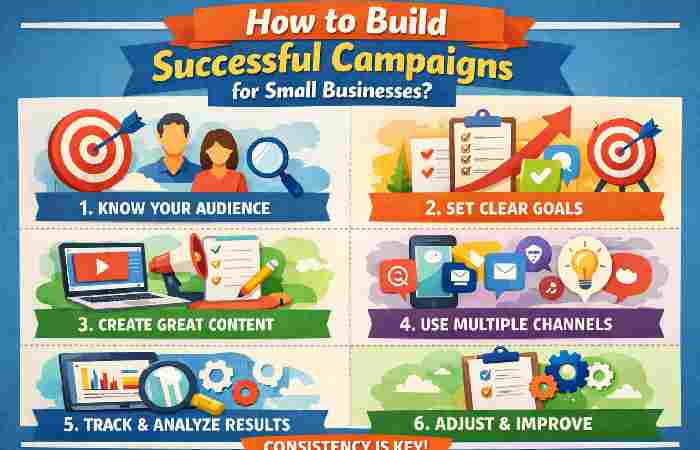
Most individuals believe that only large companies can conduct catchy campaigns. That is not true. Small businesses also may be at a certain advantage: they can be more personal, local and natural.
A small business campaign is viable through concentrating on:
- One clear audience
- One specific offer
- One memorable message
- One or two strong channels
- Real customer stories
- Consistent follow-up
Using the example of a local skincare brand, it might not require a huge advertisement budget. It can work with the educational Instagram reels, before-and-after customer testimonials, email promotion, and a power-of-the-season deal. Relevance beats noise.
The small brands are also likely to gain trust more quickly once they demonstrate the human face of the business. Supplier stories, background information, customer care and candid communications can be very strong.
Phases to a Successful Marketing Campaign.
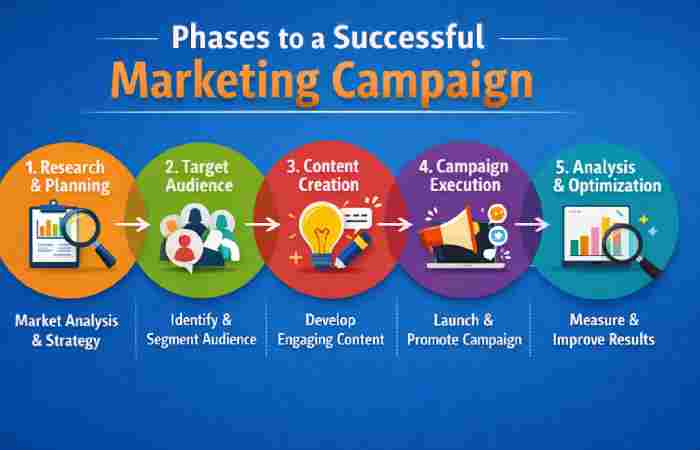
Step 1: Define the Goal
Begin with one overall goal. Keep it measurable.
Step 2: Get to know the Audience.
Research about what they desire, where they spend, and what they base decisions.
Step 3: Craft the Core Message
Simplify, make it emotional, and useful.
Step 4: Selecting the appropriate Channels.
You do not need to be everywhere and go where your audience is.
Step 5: Design Creative Assets
Utilize visuals, videos, copy and landing pages that are all in agreement with the same message.
Step 6: Launch and Monitor
Monitor outcomes at the initial stage.
Step 7: Improve and Optimize
Adjust what is not working. Scale what is.
Campaign Planning Framework
| Stage | Key Question |
| Research | Who are we trying to reach? |
| Strategy | What do we want them to do? |
| Messaging | Why should they care? |
| Execution | Where and how will we reach them? |
| Measurement | How will we know it worked? |
This simple framework helps keep campaigns focused and practical.
Why Authenticity Matters So Much
Modern audiences are smart. They can quickly sense when a campaign feels forced, exaggerated, or disconnected from reality. That is why authenticity matters more than polished perfection.
Authentic campaigns often include:
- Real customer voices
- Honest benefits instead of overpromises
- Brand values shown through action
- Relatable language
- Transparent storytelling
People do not expect brands to be perfect. They expect them to be believable.
That is a major reason many “human” campaigns perform better than overly corporate ones. They sound real, and real creates trust.
The Power of Consistency in Branding
A successful campaign is rarely built on one ad alone. It grows stronger through repetition and consistency. When people see the same message style, tone, and promise across platforms, they begin to remember it.
Consistency helps with:
- Brand recognition
- Message clarity
- Trust-building
- Long-term recall
- Professional image
A campaign that looks polished on Instagram but confusing on the website loses momentum. Consistency keeps the audience moving forward.
Lessons Brands Can Learn from Successful Campaigns
The biggest lesson is that marketing success is not random. It is usually the result of strong planning, deep understanding, emotional intelligence, and smart execution.
Here are some of the clearest takeaways:
- Know your audience better than your competitors do
- Focus on one strong idea instead of too many messages
- Make people feel something
- Keep the message simple
- Use data, but do not lose the human voice
- Be consistent across platforms
- Build trust, not just attention
Truly memorable campaigns are rarely the loudest. They are the ones that feel relevant and real.
Conclusion
Successful marketing campaigns are not just about selling products. They are about building connection, attention, trust, and action in a way that feels meaningful to the audience. The most effective campaigns combine strategy and creativity. They understand people, not just platforms. They communicate clearly, show emotion, and offer value at the right moment.
Whether it is a global brand launch or a small local promotion, the principles remain surprisingly similar. Clear goals, strong audience insight, compelling storytelling, consistency, and measurement are what separate average campaigns from memorable ones.
In a world full of noise, the campaigns that win are the ones that feel human. They speak to real needs, real feelings, and real desires. That is why successful marketing is never only about visibility. At its best, it is about resonance.