


PCNOK: In the digital and professional environment today, there are new terms and acronyms that frequently manifest themselves in the field of technology, networking, and organisational systems. PCNOK is one of these terminologies. It might not be the most familiar concept with the general audience, but it has a significant role in structured systems, digital processes, and operational conditions, where verification, validation, and coordination are required.
It has been linked to process confirmation, operational validation, and system approval processes. Organizations, which have to deal with data management, quality control, and technical operations, tend to use PCNOK-based systems so that each step within a process could be of a required standard.
Table of Contents
What is PCNOK?
It is an organisational method of confirmation or validation in technical, operational, or digital surroundings of whether a specific process, system action or outcome has satisfied the necessary standards.
To put it another way, it assists organisations in ensuring that a process is running properly or in need of adjustment.
| Term | Definition |
| PCNOK | A verification or validation mechanism used to confirm whether a process, operation, or output meets predefined standards. |
| Purpose | To ensure accuracy, quality control, and operational consistency. |
| Usage | Technology systems, workflow validation, data processing, and quality management. |
It can be thought of as a checkpoint system that helps businesses avoid errors, improve efficiency, and maintain high-quality standards.
Why PCNOK is Important
In any structured environment—whether it is technology infrastructure, manufacturing, data management, or project execution—mistakes can lead to significant losses. It provides a systematic way to verify results before proceeding to the next stage.
Key Reasons PCNOK Matters
- Quality Assurance
It helps verify that outputs meet defined requirements before they move forward in a workflow. - Error Prevention
By detecting issues early, organizations can correct problems before they grow larger. - Operational Efficiency
When processes are verified regularly, teams can maintain smoother workflows. - Compliance and Standards
Many industries must follow strict regulations, and PCNOK verification ensures compliance.
Core Components of PCNOK
A system typically involves several important elements that help maintain accurate verification and validation processes.
| Component | Description |
| Process Monitoring | Observing workflow steps to ensure they follow defined procedures. |
| Validation Rules | Criteria used to check whether outputs meet standards. |
| Approval Mechanism | Confirmation that the process result is acceptable. |
| Error Detection | Identification of problems or inconsistencies. |
| Documentation | Recording verification results for accountability and future analysis. |
These components work together to create a reliable and transparent operational system.
How PCNOK Works?
This mechanism usually follows a structured workflow designed to verify processes step-by-step.
Step-by-Step Process
- Input Stage
Data, information, or actions enter the system. - Processing Stage
The system performs tasks based on predefined instructions. - Validation Check
PCNOK rules verify whether the result meets required standards. - Approval or Rejection
- If valid → Process continues
- If invalid → Correction required
- Documentation
Results are recorded for tracking and auditing purposes.
This structured approach allows organisations to maintain accuracy, transparency, and reliability.
PCNOK vs Traditional Verification Systems
To understand PCNOK better, it helps to compare it with traditional verification or quality control methods.
| Feature | PCNOK System | Traditional Verification |
| Automation | Often automated | Mostly manual |
| Speed | Faster verification | Slower process |
| Accuracy | High accuracy through rules | Dependent on human review |
| Error Detection | Immediate detection | Errors may appear later |
| Documentation | Automatic tracking | Manual record keeping |
From this comparison, it becomes clear that PCNOK systems are more efficient and scalable, especially in digital environments.
Applications of PCNOK
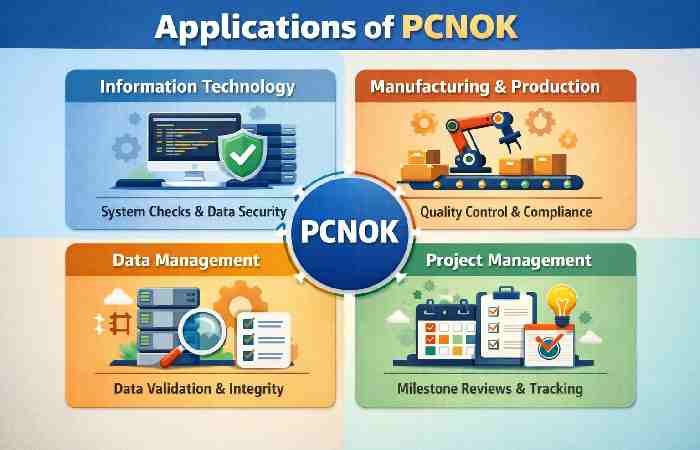
It can be applied in multiple industries where validation and confirmation processes are necessary.
- Information Technology
In IT systems, it mechanisms ensure that software processes, data transfers, and network operations function correctly.
Examples include:
- System configuration verification
- Data validation during processing
- Security authentication checks
- Manufacturing and Production
Manufacturing industries often rely on quality checkpoints to confirm product standards.
PCNOK helps ensure:
- Production accuracy
- Product quality compliance
- Reduced defects
- Data Management Systems
Data-driven organizations require strict validation procedures.
PCNOK supports:
- Data accuracy verification
- Database integrity checks
- Error detection in analytics workflows
- Project Management
In project environments, PCNOK checkpoints confirm that project milestones meet required conditions before moving forward.
Benefits include:
- Improved project control
- Reduced risk of failure
- Better documentation
Advantages of Using PCNOK
Implementing PCNOK-based systems offers numerous benefits for organisations and professionals.
| Advantage | Explanation |
| Improved Accuracy | Verification rules reduce errors in processes. |
| Faster Workflows | Automated validation speeds up operations. |
| Better Accountability | Documentation creates clear audit trails. |
| Risk Reduction | Early detection of problems prevents major failures. |
| Operational Transparency | Clear confirmation processes improve visibility. |
These advantages make PCNOK a valuable tool for organisations seeking efficient and reliable operational systems.
Challenges of PCNOK Systems
Although PCNOK provides many benefits, there are also challenges that organisations must consider.
| Challenge | Description |
| Implementation Cost | Initial setup may require investment in technology. |
| Training Requirements | Staff must understand how to use PCNOK systems. |
| System Complexity | Large organisations may need complex configurations. |
| Dependence on Rules | Incorrect validation rules can lead to errors. |
Addressing these challenges requires proper planning, training, and system design.
Best Practices for Implementing PCNOK
Organisations can maximise the effectiveness of PCNOK systems by following proven best practices.
Recommended Strategies
- Define Clear Validation Rules
Establish specific criteria for verifying processes. - Automate Where Possible
Automation reduces manual workload and improves accuracy. - Train Employees Properly
Staff should understand how PCNOK checkpoints function. - Monitor System Performance
Regular reviews help identify improvements. - Maintain Proper Documentation
Record verification results for auditing and analysis.
By following these practices, organisations can ensure that their PCNOK systems remain reliable and effective.
PCNOK in the Digital Transformation Era

As businesses move toward digital transformation, the role of validation and verification systems becomes even more important.
Modern organisations deal with:
- Large volumes of data
- Complex software systems
- Automated workflows
- Real-time decision making
PCNOK frameworks help ensure that these systems function correctly without compromising accuracy or reliability.
Key Digital Benefits
| Benefit | Explanation |
| Real-Time Verification | Immediate validation during operations. |
| Automated Monitoring | Systems check performance continuously. |
| Integration with Software | Works with digital platforms and enterprise tools. |
| Scalable Systems | Suitable for growing businesses. |
These capabilities make PCNOK an essential part of modern digital infrastructure.
Future of PCNOK Systems
The future of PCNOK is closely linked to emerging technologies such as:
- Artificial Intelligence
- Machine Learning
- Cloud Computing
- Automation platforms
These technologies will enable smarter validation systems that can predict errors before they occur.
Future Trends
- AI-powered validation systems
- Predictive process monitoring
- Automated compliance verification
- Real-time performance analytics
As technology evolves, PCNOK systems will likely become more intelligent, automated, and integrated.
PCNOK vs Other Process Validation Models
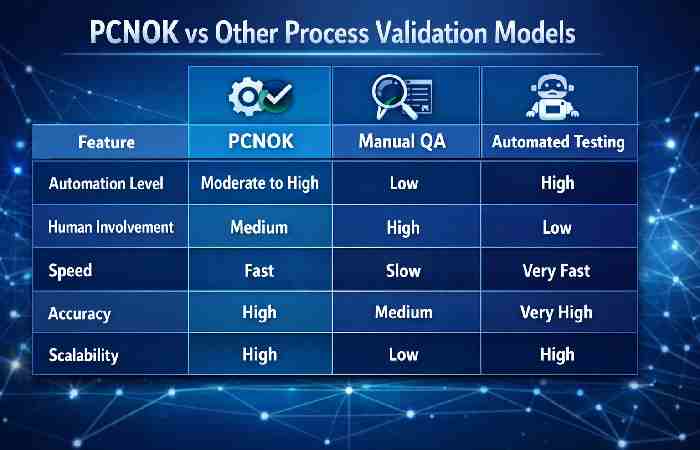
| Feature | PCNOK | Manual QA | Automated Testing Systems |
| Automation Level | Moderate to High | Low | High |
| Human Involvement | Medium | High | Low |
| Speed | Fast | Slow | Very Fast |
| Accuracy | High | Medium | Very High |
| Scalability | High | Low | High |
This comparison highlights how PCNOK serves as a balanced validation approach that combines automation with operational control.
Who Should Use PCNOK?
PCNOK systems are useful for various professionals and industries.
Ideal Users
- IT administrators
- software developers
- manufacturing managers
- quality control specialists
- project managers
- data analysts
These professionals rely on PCNOK frameworks to ensure process reliability and system accuracy.
Conclusion
PCNOK is a methodical scheme of process confirmation, validation and operational verification. The importance of this is in an age where the operations of businesses rely on technology, data, and automation; it is also necessary to ensure that the systems operate properly.